Myron C. Madden Chapel
Five Days at MemorialMyron C. Madden Chapel was a chapel within Memorial Medical Center whose significance changed over the course of the disaster. In the hospital’s religious setting, prayer was part of life during the crisis; after the evacuation, the chapel became one of the places where the dead were found and where outsiders encountered the consequences of the hospital’s collapse and delayed recovery effort.
Place Within the Hospital
A public-address announcement invited everyone at Memorial to a prayer service at 10:30 a.m. The announcement establishes the presence of collective religious practice within the hospital, though the account does not specify that this service took place in the chapel. The chapel’s later role in the story gives that religious setting a stark contrast: a hospital space associated with prayer became a site of death and public witnessing.
Discovery After the Evacuation
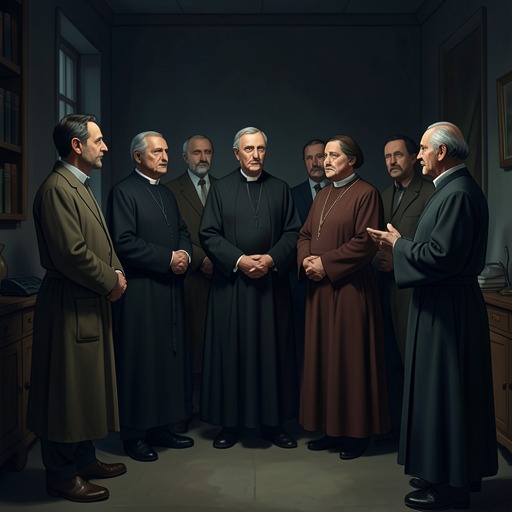
On September 6, days after families had begun searching for loved ones while bodies remained unrecovered across the flooded city, MSNBC cameraman Tony Zumbado reached Memorial by kayak. Following the smell of death, he came to the chapel’s wooden door, where a small yellow lined-paper notice marked DO NOT ENTER had been taped in place. His camera recorded more than a dozen bodies inside, lying on low cots and on the floor under white sheets. The footage made the chapel a visible point of contact between the hospital’s closed interior and a wider public still waiting for answers about the dead.
A Prolonged, Unofficial Wake
The dead remained at Memorial for days while government officials argued over who was responsible for recovering them. In that interval, the deceased were visited by people whose purposes reflected the unsettled aftermath: National Guardsmen from San Diego assigned to help secure the neighborhood, DynCorp security guards contracted by Tenet and recently returned from Iraq and Afghanistan, a Christianity Today reporter, and a relief worker. The chapel thus became part of a prolonged, improvised wake, before a formal recovery operation had begun.
Recovery and Significance
A chaplain who entered the chapel while searching for survivors compared what he saw to Dante’s The Divine Comedy in an interview on CNN. On September 11, more than a week after the last living patients and staff had departed, a disaster mortuary team recovered forty-five bodies from across Memorial: the chapel, morgues, hallways, the LifeCare floor, and the emergency room. The chapel was one location among several, but its discovery by a camera crew and its later inclusion in the recovery underscore how the building shifted from a place of care to a record of an evacuation whose human aftermath remained visible after the living had gone.